


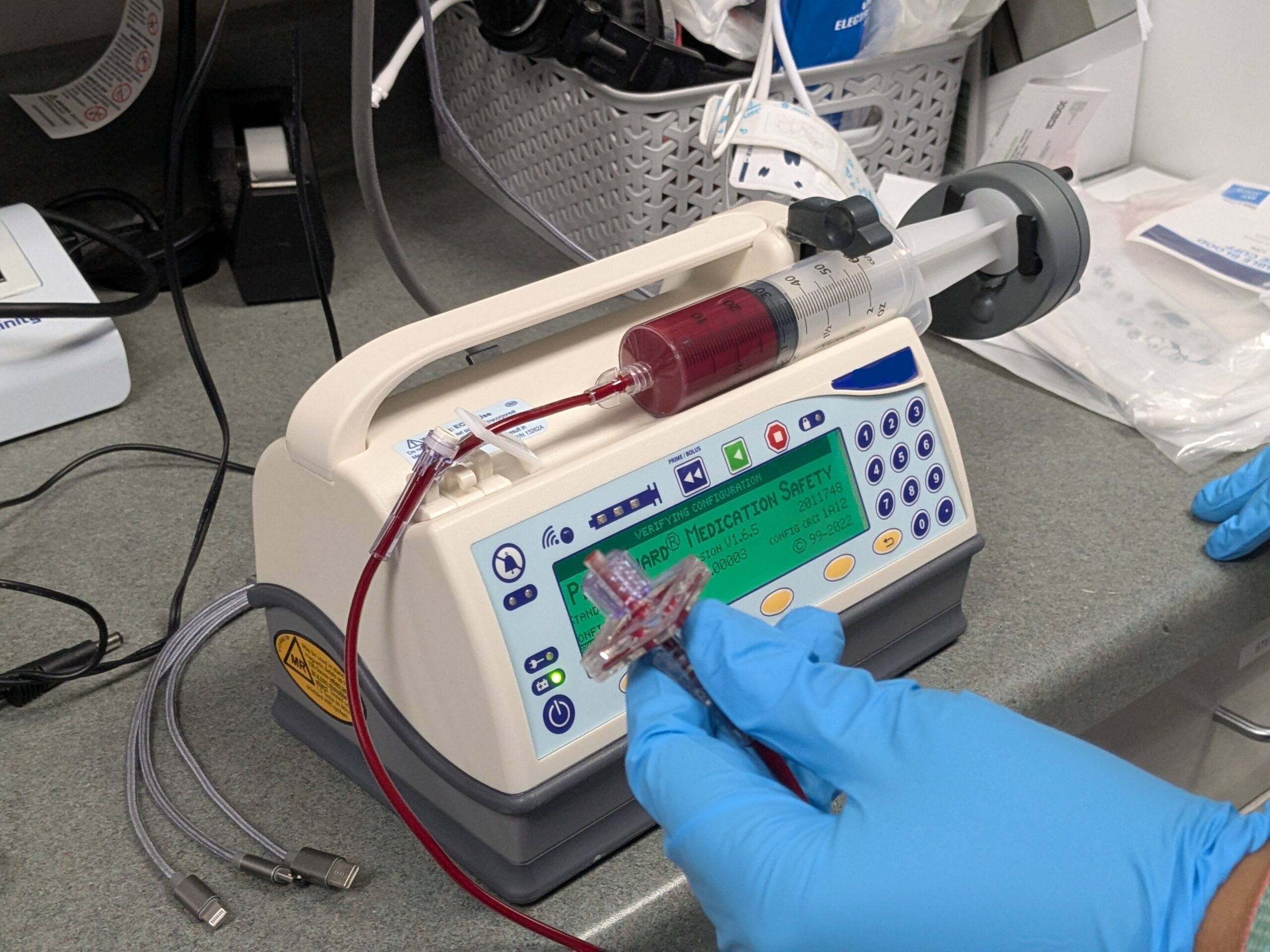
December 2025
In this VETgirl online veterinary continuing education blog, Dr. Amy Kaplan, cVMA, DACVECC, MRCVS details the use of life-saving, blood transfusion products in veterinary medicine…whether you’re in emergency practice, specialty practice, or general practice! Blood product transfusions are one of those interventions that can turn a crashing patient around in minutes — but they’re also intimidating. Which blood product do you reach for? How much do you give? And what’s the difference between all those plasma types again? In Part 1 of our 2-part series, we focus on the blood products themselves. In Part 2, we’ll dive deeper into coagulation, diagnostics, and managing the bleed. When your finished reading this one, make sure to check out Part 2 HERE!
Veterinary Transfusion Medicine 101 Part 1: Blood Products, Plasma Types, Platelets and Dosing Explained
Dr. Amy Kaplan, cVMA, DACVECC, MRCVS, CE Program Manager, VETgirl
Blood Products Decoded: Key Facts for Veterinary Practice
Transfusion medicine can feel overwhelming — do I need whole blood (WB), packed red cells (pRBCs), some kind of plasma, can I store the leftovers, what’s the dose again?… it’s a lot to keep straight especially when needing to act fast for the critical patient. In this blog, we’ll break it all down so you can quickly see the key differences. And if you’d rather skip straight to the essentials, be sure to bookmark our VETgirl Blood Product Quick Reference Guide within our Clinical Transfusion Essentials Toolkit for an at-a-glance guide to blood product types, storage, and dosing.

Red Blood Cell Products
Fresh whole blood (FWB):
FWB is exactly what it sounds like: blood collected directly into an anticoagulant, usually CPDA-1 or CPD… though in a true pinch, even heparin can do the job! FWB brings the whole package: red blood cells, white blood cells, platelets, all clotting factors, plasma proteins, albumin, and electrolytes. In practice, if you’re collecting FWB in-hospital, it’s almost always because your patient needs it stat—so it typically goes straight from donor to an anticoagulant-containing collection bag (or syringe) to recipient, with little to no storage time in between. Some literature suggests you can hold FWB at room temperature under gentle, continuous agitation for up to 24 hours. But here’s the catch: once it’s been refrigerated for more than 8 hours, or it’s been sitting out beyond 24 hours, it officially gets reclassified as stored whole blood (SWB). And that name change matters — it signals that storage conditions and time have already started altering the blood’s components (think temperature effects, preservative shifts, and biochemical changes). Clinically, that means its ability to deliver platelets, clotting factors, and optimal oxygen-carrying capacity may not be quite the same as when it was freshly collected. So the takeaway? Use it right away!
Stored whole blood (SWB):
SWB still has a lot to offer, but it’s not identical to FWB. It contains red blood cells, plasma proteins, albumin, and most clotting factors. The catch? Factor V and VIII start to degrade, and both platelet number and function take a hit over time and with cold storage. That said, newer evidence suggests platelet function may still be partially preserved for up to 15–21 days of refrigeration. The clinical bottom line: if your patient is thrombocytopenic or has a platelet function disorder, SWB isn’t your go-to. In those cases, you’ll want true fresh whole blood or a dedicated platelet product.
Whole blood is useful for replacing everything lost in acute blood loss — RBCs, clotting factors, and volume all in one product. Either WB or packed red blood cells (pRBC) can be used to correct anemia, though in those cases, pRBC may be more efficient. So if you have SWB or recently donated FWB, how much do you give?
Whole blood: What’s the dose?
There is no single “right” way to dose whole blood, but here’s some go-to formulas:

In practice, we can simplify: about 2 mL/kg of FWB will raise PCV by ~1%. Since we usually aim for a ~10% bump, this VETgirl most often reaches for 10-20 mL/kg of whole blood. I’ll push that dose higher if there’s ongoing hemorrhage, or scale it back in patients where fluid restriction is a concern. Clinicians just need to remember the oncotic load: whole blood carries protein, so in patients with cardiac disease, renal compromise, or other situations where fluid balance is tight, slower rates (and careful monitoring) are the name of the game.
Packed Red Blood Cells (pRBC):
pRBC units are made by spinning down whole blood to strip off the plasma, leaving you with concentrated red cells suspended in anticoagulant and preservatives. Shelf life? 35–42 days in the fridge, depending on the preservative used.
- Contains: RBCs only
- Missing: functional platelets and clotting factors

Image courtesy of Dr. Amy Kaplan, cVMA, DACVECC, MRCVS
pRBC: how much blood to give?
Here’s the catch with pRBC — you’ve got to make sure there’s enough circulating volume for those red blood cells to ride in. If your patient is hypovolemic, top-off with intravenous (IV) fluids first, otherwise those red cells won’t actually improve oxygen delivery because they can’t get perfused. Isotonic crystalloids (like saline) can be given before, during, or after transfusion to make up the plasma volume that was spun off (just keep an eye out for volume overload if you’re running them during the transfusion). CAUTION: don’t run fluids containing calcium (like LRS) in the same line. Calcium binds the citrate anticoagulant in the blood bag and sets you up for clots forming in the line.
As for dosing, you can use the same formula above to determine the volume of blood needed based on PCV goals, but in real life, who’s got time for all that math? Quick hack: ~1 mL/kg of pRBC bumps PCV by ~1%. The usual range for a pRBC transfusion is 6–10 mL/kg, and this VETgirl tends to favor the higher end (10 mL/kg) unless there’s a reason to pull back such as the need for fluid restrictions.
Clinical use: pRBC is your go-to when the priority is red blood cell replacement, whether from hemorrhage or from non-hemorrhagic causes (e.g., bone marrow disease, chronic illness). In hypovolemic patients, always give IV fluids first, or simultaneously — they’re the taxi that gets those red cells delivered to the tissues. For patients that are already euvolemic, keep transfusion rates conservative, especially in those with cardiac or renal disease to prevent fluid overload. And if blood loss is the issue, don’t forget: pRBC won’t give you clotting factors, so keep an eye on coagulation status and supplement with plasma products if needed. Looking for a quick guide to coagulation testing? Check out our Coagulation Test Interpretation Guide in our VETgirl Clinical Transfusion Essentials Toolkit. For a more in-depth understanding of what coagulation test to choose and why, check out Part 2 of this Veterinary Transfusion Medicine 101 (coming soon!).
Plasma Products — Which One Do I Pick?
Plasma products can:
- Replace clotting factors (inherited or acquired coagulopathies)
- Provide albumin and other plasma proteins
- Support a damaged endothelial glycocalyx
- Contribute to volume replacement in hemorrhage
Here’s where things can get a little confusing. There are so many plasma products (and just as many acronyms) that it can feel like alphabet soup. At the most basic level, plasma is separated from RBCs, then either frozen or refrigerated. How it’s processed (timing + temperature) determines the label it gets—and which factors it still contains. Translation: not all plasma products are created equal, so you need to know what’s in your bag before you hang it.

Image courtesy of Dr. Amy Kaplan, cVMA, DACVECC, MRCVS
Fresh plasma:
Plasma separated from FWB and administered within 6 hours of initial blood collection; contains all clotting factors + albumin.
Fresh frozen plasma (FFP):
Plasma separated from RBCs within 8 hours of initial blood collection, then frozen; stable for up to 1 year. Contains all clotting factors, immunoglobulins, and albumin. If you’re needing to replace a clotting factor deficiency, FFP will have what you need, but how much will be needed depends on the severity of the coagulopathy (e.g., hemophilia, consumptive coagulopathies, hypofibrinogenemia).
Frozen plasma (FP):
Comes from either of these two scenarios:
- FFP stored >1 year
- Thawed FFP that’s been refrozen within 24 hours
FP contains albumin and most factors, but loses factor VIII and X. FP can still be used to replace albumin or factor VII (e.g., liver disease, vitamin K1 rodenticide).
Plasma frozen within 24 hours (FP24):
Plasma separated within 8–24 hours after initial blood collection and then frozen. Although FP24 has slightly lower factor activity compared to FFP, evidence suggests it should still be adequate for hemostasis.
Liquid plasma (LP):
Also called “never frozen” plasma. After separation from RBCs, LP is stored refrigerated for up to 7 days. By day 7, von Willebrand factor (vWF) is below reference range, but other clotting factors retain ~50% activity. This may not be the right choice to treat a suspected or confirmed von Willebrand disease (vWD), but it may still be useful in providing albumin, oncotic support, and clotting factors.
Thawed/refrigerated plasma (TP or RP):
>24h after thawing, FFP it is known as TP or RP to indicate that coagulation factor activity is decreasing with storage. However, evidence shows factor VIII and X activity drops with time, but even at 14 days they often remain within reference ranges.
To summarize: If your patient has a true inherited or acquired coagulopathy and needs factor replacement, fresh plasma or FFP are your best bets. Products like FP24, LP, TP, and RP can still work, but may not pack the same punch in a bad bleeder—and LP in particular may not have enough vWF to manage vWD. Frozen plasma is not the right choice for Hemophilia A (factor VIII deficiency), but it still brings albumin and the stable clotting factors to the table. On the flip side, if your goal is albumin replacement, oncotic support, volume expansion, or glycocalyx protection, pretty much any of the plasma products will do the job.
Plasma Products: What’s the Right Dose?:
Dosing plasma products isn’t one-size-fits-all — it depends on why you’re giving it. Think about the underlying problem first, then tailor the volume to match.
- Inherited or consumptive coagulopathies: ~10–20 mL/kg, adjusted to the severity of factor loss (AKA – recheck your coagulation tests to see if your patient needs more)
- Hypoalbuminemia: generally, it takes 5 mL/kg of plasma to raise albumin by 0.5 g/dL
- Hypovolemic shock: sometimes calls for 20–30 mL/kg
Just remember that plasma doses are always patient- and situation-dependent, so reassess your patient after each bolus (check PT/PTT) before reaching for more.
Plasma derivatives – what are these?
Plasma derivatives are basically the specialty products you get when you take fresh plasma or FFP and do more with it. They’re not as commonly stocked as FFP, but when you need them, they can be game-changers. Here’s the breakdown:
Cryoprecipitate (CRYO):
Made by slowly thawing FFP and spinning down the precipitate; stored frozen for up to 1 year.
- Contains: the “big four” — vWF, factor VIII, fibrinogen, fibronectin
- Clinical use: go-to product for active or anticipated bleeding in patients with von Willebrand disease or Hemophilia A (factor VIII deficiency)
- Dosing: ~1 unit per 10 kg body weight, then reassess, because every bleeder is different!
Cryosupernatant (Cryo-poor plasma, CPP):
This is the leftover plasma after CRYO has been removed.
- Contains: stable vitamin-K–dependent factors (II, VII, IX, X), but is deficient in: VIII, vWF, fibrinogen, fibronectin.
- Clinical use: Useful for Hemophilia B (factor IX deficiency), vitamin K1 rodenticide toxicity, or to provide albumin replacement.
- Dosing: Similar to FFP.
Canine-specific albumin (CSA):
Finally, a product made for dogs! Historically, human or bovine albumin has been used, but reactions to these products can be severe (e.g., immune-mediated) to life-threatening (e.g., anaphylaxis). CSA reduces that risk (though not to zero-risk!).
- Processing: derived from canine plasma, freeze-dried, and stored at room temp for up to 2 years. Once reconstituted, it’s stable if refrigerated for ~24 hours.
- Dosing: protocols vary, but as a general guide, ~450 mg/kg CSA raises patient’s albumin by ~0.5 g/dL.

Image courtesy of Dr. Amy Kaplan, cVMA, DACVECC, MRCVS
Platelet Products
Thrombocytopenia and thrombopathia are some of the most frustrating conditions we face in ECC owing to the limited fast-acting treatment options available. Platelet products do exist, but their limited availability can be a real challenge, meaning they’re usually not sitting in your hospital fridge waiting for use. Here’s the rundown on platelet products:
Platelet-rich plasma (PRP):
Produced by gentle centrifugation of FWB; can be stored at room temp with agitation for up to 5 days.
- Contains: platelets, clotting factors, plasma proteins
- Dosing: ~10 mL/kg
Platelet concentrate (PC):
Made from FWB by a harder-spin centrifugation or by plateletpheresis; also stored agitated at room temp for up to 5 days.
- Contains: concentrated platelets
- Dosing: ~1 unit/10 kg (each unit usually raises platelet count ~10-40,000/µL)
In reality, though, because of a short shelf-life, PRP and PC availability is generally limited to hospitals with in-house blood banking facilities. So what about options that are more commercially available?
Cryopreserved platelets:
Plasma concentrate can be treated with dimethyl sulfoxide (DMSO) and stored frozen for months to a year depending on temperature. (But let’s be real — DMSO smells awful! If you’ve ever used it, you know exactly what we mean.)
Lyophilized (freeze-dried) platelets:
These are platelets preserved by freeze-drying, and are reconstituted with fluid before use. Depending on the manufacturing methods used, some formulations are stable at room temperature for up to 3 years.
When do we really need to give platelets?
Transfused platelets don’t last long in the body (often only hours to a day). They’re best reserved for life-threatening bleeding — think ITP with active hemorrhage, severe thrombocytopenia (<20,000/µL) with clinical bleeding, or patients requiring immediate life-saving surgery with platelet levels <40,000/µL. Just remember – platelet products are a stopgap to get through a crisis or critical surgery — not a cure, and not a long-term fix.
VETgirl Takeaway?
Blood products can be absolute game-changers — if you know what’s in the bag. Using the wrong one wastes time, money, and may cause patient harm.
- Whole blood: Great for acute hemorrhage, can be used for anemias, great for hemorrhage as it provide some platelets (but with diminished platelet function over time and storage) – the fresher, the better for platelets!
- pRBCs: Great for replacing larger amounts of red blood cells (anemia, hemorrhage)—but don’t expect clotting support or proteins, so for a hemorrhage you may need to pair this plasma, and hypovolemic patients will need additional fluid replacement with isotonic crystalloids.
- Plasma products: Have the most variety in name and function, so be sure to know which factors you’re replacing, or when in doubt, just reach for fresh plasma or FFP as your “all-in” plasma products! Keep in mind that plasma contains too little albumin to significantly affect colloid osmotic pressure (requires large amounts over days to be effective).
- CRYO: Your go-to for vWD and Hemophilia A.
- CSA: The safer (though not risk-free) way to replace albumin in dogs.
- Platelet products: Hard to come by, and should be reserved for patients who really, critically, need them.
BOTTOM LINE: Build familiarity with the blood products available at your hospital. When the next bleeder rolls through the door, don’t panic! — just match the product to the problem.
Abbreviations:
BW = body weight
CPD = citrate-phosphate-dextrose
CPDA-1 = citrate-phosphate-dextrose with adenine
CPP = cryo-poor plasma (also known as cryosupernatant)
CRYO = cryoprecipitate
CSA = canine-specific albumin
CWB = cold whole blood
DMSO = dimethyl sulfoxide
FFP = fresh frozen plasma
FP = frozen plasma
FP24 = plasma frozen within 24 hours of blood collection; also written as PF24
FWB = fresh whole blood
LP = liquid plasma; never-frozen liquid plasma
PC = platelet concentrate
PCV = packed cell volume
PT = prothrombin time
PTT = partial thromboplastin time (often used interchangeably with aPTT, Activated Partial Thromboplastin Time)
pRBCs = packed red blood cells
PRP = platelet rich plasma
RBC = red blood cell
RP = refrigerated plasma
SWB = stored whole blood
TP = thawed plasma
vWD = von Willebrand disease
vWF = von Willebrand factor
WBC = white blood cell
Resources:
- eclinpath.com, Cornell University College of Veterinary Medicine, https://eclinpath.com/hemostasis/transfusion-medicine/components, accessed August 5, 2025.
- van der Meer PF, de Korte D. The effect of holding times of whole blood and its components during processing on in vitro and in vivo quality. Transfus Med Rev. 2015;29(1):24-34.
- Silverstein DC, Hopper K. Small Animal Critical Care Medicine. 3rd, Saunders, 2022, pp. 409-415.
- Cap AP, Beckett A, Benov A, et al. Whole blood transfusion. Mil Med. 2018;183(9/10):44-51.
- Hux BD, Martin LG. Platelet transfusions: treatment options for hemorrhage secondary to thrombocytopenia. J Vet Emerg Crit Care. 2012;22(1):73-80.
- com, Cornell University College of Veterinary Medicine, https://www.vet.cornell.edu/animal-health-diagnostic-center/laboratories/comparative-coagulation/clinical-topics/transfusion-guidelines, accessed August 4, 2025.
- Davidow, B. Transfusion Medicine in Small Animals. Vet Clin of North Am Sm An Pract. 2013;43(4):735-756.
- Edwards TH, Darlington DN, Pusateri AE, et al. Hemostatic capacity of canine chilled whole blood over time. J Vet Emerg Crit Care. 2021;31(2):239-246.
- van der Meer PF, Klei TR, de Korte D. Quality of Platelets in Stored Whole Blood. Transfus Med Rev. 2020 Oct;34(4):234-241.
- Walton JE, Hale AS, Brooks MB, et al. Coagulation factor and hemostatic protein content of canine plasma after storage of whole blood at ambient temperature. J Vet Intern Med. 2014;28(2):571-5.
- Schneider A. Blood components. Collection, processing, and storage. Vet Clin North Am Small Anim Pract. 1995;25(6):1245-61.
- Ng ZY, Stokes JE, Alvarez L, et al. Cryopreserved platelet concentrate transfusions in 43 dogs: a retrospective study (2007-2013). J Vet Emerg Crit Care. 2016;26(5):720-8.
- Brown M, Kuhn B, Moskowitz KA, et al. Characterization of a canine freeze-dried platelet-derived hemostatic agent: A preclinical model for surgical and traumatic hemorrhage. Thrombosis Research. 2024;238:67-77.
- Proverbio D, Perego R, Baggiani L, et al. Hemostatic Activity of Canine Never-Frozen Liquid Plasma Collected for Transfusion. Front Vet Sci. 2022;15:1-11.
- Neisser-Svae A, Trawnicek L, Heger A, et al. Five-day stability of thawed plasma: solvent/detergent-treated plasma comparable with fresh-frozen plasma and plasma frozen within 24 hours. 2016;56(2):404-9.
- Mesa-Sanchez I, Ferreira RRF, Blasi-Brugué C, et al. Evaluation of bacterial growth, effects on albumin, and coagulation factors in canine fresh frozen plasma administered as continuous rate infusion exposed to room temperature for 12 hours. J Vet Emerg Crit Care. 2023;33(5):534-539.
- Grochowsky AR, Rozanski EA, de Laforcade AM, et al. An ex vivo evaluation of efficacy of refrigerated canine plasma. J Vet Emerg Crit Care. 2014;24(4):388-97.
- Urban R, Guillermo Couto C, Iazbik MC. Evaluation of hemostatic activity of canine frozen plasma for transfusion by thromboelastography. J Vet Intern Med. 2013;27(4):964-9.
- Mastrocco A, Cazzolli D, Prittie J. The effect of storage at 4°C on canine-specific albumin on product sterility and albumin concentration. J Vet Emerg Crit Care. 2021;31(5):574-577.





Only VETgirl members can leave comments. Sign In or Join VETgirl now!